

Author: Kim Aycock
Camp is a Place to Find Your People
The song, “Find Your People” by Drew Holcomb and the Neighbors caught my attention recently, so I decided to look up the lyrics. Now I know why it came across my radar. The song speaks to the camp community that is created every summer at Camp Woodland; 2023 being no exception. Now that your family has been reunited, this may give a peek into the window of what your camper/s experienced over the course of 6 weeks.
 You gotta find your people
The ones that make you feel alright
The kind you want to stay up with all night
You got to find your people
The ones that make you feel whole
That won’t leave your side when you lose control
The ones that don’t lose your soul
 You gotta find your people
The ones that get the joke
Who understand what you’re saying before a word is spoke
You gotta find your people
That put the needle in the groove
When you’re together, you got nothing to prove
When you’re together, you got nothing to lose

In a world of strangers, you don’t know who to trust
All you see is danger, trying to find what you lost
You can’t go in alone, everybody needs help
You gotta find your people, then you’ll find yourself

You gotta find your people
That’ll call your bluff
Who’ll ride along when the road is rough
You gotta find your people
The ones that you feel equal
They pick you up and don’t put you down
Help you find your way in the lost and found

In a world of strangers, you don’t know who to trust
All you see is danger, trying to find what you lost
You can’t go in alone, everybody needs help
You gotta find your people, then you’ll find yourself
The ones that understand you
The ones that lend a hand to you
The ones that don’t demand anything from you
You gotta find your people
The ones that make you feel alright
That tell you the truth then wish you well
You gotta find your people, then you’ll find yourself
You gotta find your people, then you’ll find yourself
After spending 6 weeks in the camp ecosystem, these girls have “found their people”. Now that your camper/s are back at home and making their way into the world again, our hope is that they are able to stay true to themselves and “find their people” at school, in sports and activities, at work, and with their friend groups. This song is a yardstick for measuring the true depth of friendships. Do those friends make her feel alright? Make her whole? Will they leave her side or ride along when the road is tough?
Will she falter? Absolutely. Will she make poor choices? Most likely. Will she need gentle reminders? Of course. That’s our job as adults. We guide and support them on the path to “finding their people”.
I think it is safe to say that each camper who spent the summer with us knows a little more about herself as a result of the people she spent time with. We hope this will last the next 9 months or so until she can be back in the Northwoods at Camp Woodland with “her people” and that you will reserve her spot for 2024 (early bird discount through 8/31/23 when registering for 6 weeks): https://cwtp.campbrainregistration.com
Advice from Your Campers: The Closing of Camp and the Opening of Home
 Thanks to a suggestion from a parent who is looking for advice about the upcoming Parents Weekend, I am offering some thoughts your campers shared with me (without mentioning any names) about the transition from camp to home that will be occurring in a few short days. As mentioned earlier this summer for drop-off on Opening Weekend, there are a lot of clashing emotions – some understandable and relatable, others not so much.
 Heartstrings will be pulled again as there are mixed feelings about the change that is about to happen. For those of you driving to camp, it will be noticeable when you join us for Parents Weekend. For others of you, it will take place when you pick up your camper/s from the bus at O’Hare or when you greet them at the airport in Mexico or other destinations. As one camper eloquently shared, think of it as the closing of camp and the opening of home.
 Please know that as you read this, your daughter/s love you very much! They can’t wait to see you – 6 weeks is a long time to be separated. They are also a little nervous in anticipation of what this coming weekend means. It is hard to understand from your point of view, and it is hard to explain from their perspective. When I interviewed campers of varying ages, I framed it in a way that parents would like “advice” on how to “act” when they see you at Woodland or after the journey home. I am going to try to keep it as candid as possible so that it is genuinely their words and not mine.
 For those of you who have campers on the young end of our age range or who are with us for the very first time, these girls don’t really know what to expect. Keeping this in mind, you may find some of their answers to be rather humorous. First of all they want you to know that all of the shows are going to be good. That is actually an understatement – they are going to be GREAT as I’ve been able sneak a few peeks in activities this week as they are rehearsing and practicing for all of the end-of-year shows. They are VERY excited for you to see what they have learned and accomplished in riding, swimming, drama, dance, gymnastics and arts & crafts (don’t worry – you can see other activities, too, on Saturday before the shows). They also suggest that you take lots of photos (for those of you not able to join us at camp, we will be posting these online and via social media). Oh, and if you are bringing the family dog, bring a leash!
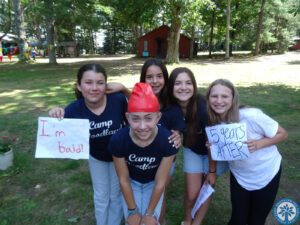 They also wanted me to tell you that Woodland is the BEST. CAMP. IN. THE. WORLD. They want you to have fun while you are here. They want you to see the animals, the lake, and all the places they travel to and from during their day. Ask them questions about camp. What are the names of the horses? Which one did you like riding the most? Where do you eat meals? What is the favorite new food you tried? Where did you hang out during Rec Swim? What games did you play? Where did adventures take you in canoeing or sailing? Where was the Mother Lode hidden this year? Where did you find the CIT’s during “Alien Invasion”?
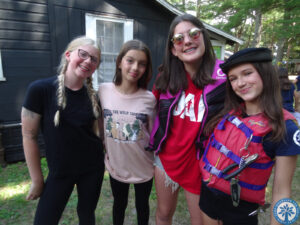 They want to tell you EVERYTHING! Listen to their stories about what they did and who was in their cabin. They also want to catch up on news from home. Did the dogs have fun? Was the extra room added? How is Grandma? There were a few requests like having their bed made, room clean, and favorite food waiting (LOL). And, they are looking forward to a BIG HUG.
The older campers are and the more years they have been with us, the more challenging the transition can be. These girls are looking for “space” to do their thing and be with the people here. They are very much aware of how hard it is going to be to say good-bye to their camp friends and summer “family”. They also don’t want to ignore you or make you feel bad. They understand it is hard for you too. These girls prefer not to talk about school, sports or activities, what’s next, SAT/ACT prep, etc. They want to stay in the moment of the here and now of camp for as long as possible. They need closure on this experience before opening the door of what awaits them at home or in the “real world”.
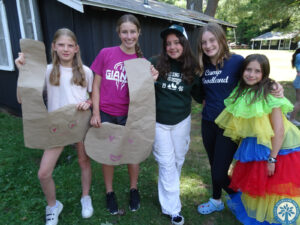
Veteran campers request that you take their sadness seriously. It is real. It is deep. It is unpredictable. You may see tears at odd times. Or laughing and crying simultaneously. Some campers may not say much on the ride home, others will be talking non-stop. You just never know. They will share when they are ready. Let it come in their own time. Show you are interested and engaged when the words start to flow. All they really need is for you to listen.
 For those campers on the bus to Chicago, there will be multiple “good-byes”. They will be sad to leave camp and then once they settle in for the long ride to the airport, they are happy to be traveling with a bus full of people who were part of their summer experience. There will be another “good-bye” once they get off at O’Hare. For those members of our camper family from Mexico, one more farewell will take place once the plane lands in Mexico City. This is the final “adios” on the closing of camp and the opening of home. It is still hard to let go. Emotions are a tricky cast of characters. Your camper/s will appreciate your empathy as they make their re-entry. You may not understand it, and that is OK. Your child/ren will recognize the effort being made.
This weekend and the first few days home, campers just need a little time to process their experience. It will come in large waves at the beginning and wane as the days go by (but never completely go away). They will remember stories and snippets of the summer of 2022 indefinitely.
 While some of what the campers said may be hard to take in, please don’t take it personally. Think of the wonderful gift you gave your daughter/s by sending them to camp. Often material gifts are novel for a short period of time and then they go unused or forgotten. You gave your child the VERY. BEST. GIFT. OF. ALL. TIME. You will see the effects of the Woodland experience all year long (and beyond!). We THANK YOU for sharing your most precious gift with us and hope you will consider having her return for 2024 (click HERE to register)!
p.s. The CIT’s are SUPER excited for you to see the Co-Ed Show on Saturday night at 7:30 pm at Towering Pines!
*This blog was originally posted on August 2, 2022 and has such an important message that I decided to pull it out again!
The Device Dilemma
 In a few short days, the summer of 2023 will come to a (screeching!) halt. Parents, caregivers, siblings, friends, and possibly a pet or two will descend on our 6-week Northwoods “bubble”. With that brings many decisions to make regarding the re-entry of your camper into the world of home, school, activities, friends, etc. There are also some decisions to consider about coming back into the world of technology. It’s not something to take lightly…there is a golden opportunity to do things differently and set the tone for the year ahead.
For six weeks your camper/s have been navigating the world without one single device. They have not been distracted by dings, rings and buzzes. No one has been checking to see how many likes, favorites, views, or other social media tally has been racked up to give a temporary/false sense of popularity. Not a single person has been privy to what events or gatherings they might have missed because there were conflicting obligations or there was an intentional (and devastating) non-invitation.
 The next few days are the perfect time to consider and discuss the options and consequences before handing over your camper’s smartphone, tablet, or other device. I recognize that for some campers, long-distance or international travel is involved in the journey home, thus there is a need to be able to communicate with them during their bus ride and/or flight back. I would still like to challenge you to think about and come up with a plan for once everyone is back home safely.
What prompted me to even think about this is a Growing Leaders blog I recently read about an interesting trend among kids today. I discovered there is a growing population of young people who have had enough of being glued to screens. They are looking for and needing/craving something more. Something their phones and devices can’t provide. This is the main reason the Luddite Club was founded by a high schooler in Brooklyn, NY, and why its members assemble in-person on Sunday afternoons on the steps of the Central Library on Grand Army Plaza.
 The tie that binds this group is that they decided at some point to put their “smart phone” away for good and use a flip phone or no phone at all. The “push” in many instances for this unexpected turn originated by parental insistence that the mobile device be taken away for a period of time as a necessary consequence. After the initial shock of being without their communication lifeline, the teens realized that they were better off not being tethered to something that turned them into a version of themselves they didn’t recognize or even like anymore.
A current parent and longtime Woodland camper/staff member emailed me after reading the “Addition Through Subtraction” blog that was posted last week. This alum shared she appreciated that her kids return from camp having mentally slowed down to a healthy speed. “As a family, we take advantage as we roll straight from camp (by way of the washing machine) into a vacation at the beach where we all slow down, and we all love it. Three hours spent on a board game? No problem. Two hours reading a book? Great! Crazy slow mini golf? I double dog dare you.” This post-camp family time is intentionally sans devices.
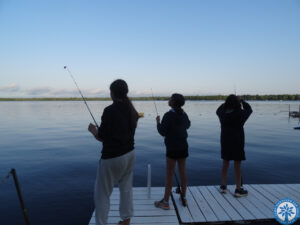 She further states that, “My mom told me recently that my dad’s late life mobility issues were an unexpected gift, because she realized that she now looked up when she walked slowly to match his reduced pace, and she observed so much that she had been missing for years.” Great words to live by! I have that found that looking at my phone while trying to walk our dogs or do something else is robbing precious time from being present in the beauty of where I am at that moment. I can’t get those seconds or minutes of seeing the sun break the horizon, a heron flying overhead with a fish in its mouth, or the exposed beach at low tide back if I choose to have my head down and eyes peeled to a small piece of rectangular glass.
Is this an easy ask? Heck no! Are the short term struggles worth the long term benefits? I believe so. 100%. Otherwise, I would not be writing this! Here are a few ideas to consider as a starting point for helping your child/ren become more aware of the impact their device is having on them and the benefits of scaling back on device time if not forgoing it altogether in the months ahead. Maybe a pros/cons list is in order now that they are coming off almost 45 days without one!
- Share stories of kids their age who are taking a break.
There are even examples of campers in our own community delaying possession of their devices following their 6 week camp experience. In fact, one such CIT gave her phone back to her mom before jumping in the car to go home last summer. She knew she wasn’t ready to be immersed into the social pressures of what it means being “online” 24/7 and the mind-numbing feeling of being lost in endless scrolling.

- Curate dinner table or other opportunities for meaningful discussions.
Your camper is used to sitting with their cabin group for three meals every day having real, in-depth conversations about what is experienced and learned while everyone goes in different directions during activity periods. Sharing ups and downs, successes and failures, along with stories and past experiences from home is normalized when sitting around a table or in a circle at cookout or picnic multiple times a day. Dreams, hopes and goals are also being shared during meals or other random times of checking-in throughout the day with cabinmates and other camp friends. This has been a regular part of the fabric of every single day at camp for your daughter/s since they arrived on June 24. I would venture to say on the low side that 5-6 hours a day on average is spent in these organic interactions!
- Plan device-free days or times.
If going cold turkey with time spent on devices is too much or not realistic for your household situation, consider starting with times of the day (meals, homework time, etc) or certain days (Saturday, Sunday, or days during a holiday break) that are device-free. Having this conversation and together coming up with your family plan will help create buy-in from your camper/s.

4. What now?!
Last time I checked, stamps are still available at your local post office or other customer service counter. Campers will have address lists of our community in their memory folders and can connect with camp friends using “snail mail”. Rounding up some fun stationery, pens, stickers and other items can make letter-writing a more desirable means of communication. Instill “rest hour” at home when possible and encourage this type of activity (another camp routine). You can plan on hearing from us about once a month with photos, newsletters, and camp news that will keep the spirit of being “unplugged” alive throughout the year.
We wish you a great school year and look forward to when we can all come together at Camp Woodland for another 6-weeks of being device-free!
An Alum’s Reflections on the Value of Working at Camp
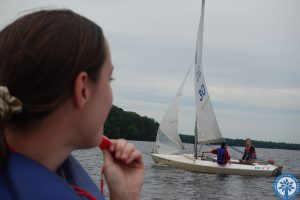 As a recent college graduate who is currently applying to grad school, I have found myself reflecting on my four summers as a Woodland counselor through a totally new lens. Any returning counselor will tell you that there is something so unique and special about working at camp. Whether it’s having the opportunity to spend time in such a beautiful natural environment, challenging yourself to meet new people and try new things, or becoming the type of leader you looked up to as a camper, being a counselor is a priceless experience.
However, being a camp counselor is often hard to write about in resumes and applications despite it being such valuable work experience. It is challenging to explain camp to those who have never experienced it first hand as on the surface it appears to be a “fun” job but not a “serious” or “real” one. In a time when so much emphasis is placed on internships, shadowing experiences, and summer classes, it is important to remember the many lessons and skills that are gained by being a counselor. To list a few:
 Leadership: Counselors are responsible for the health and safety of a cabin group of 6-10 campers, teaching activities in one or more areas, and possibly directing an activity while managing several other staff members. You ensure that groups can work together cohesively to provide a positive camp experience for everyone.
Teamwork: Working with a co-counselor in the cabin, and the rest of the staff at camp, you became an expert team player. Being able to take into account points that differ from your own and learning how to trust your camp sisters is a skill that will be very beneficial to just about any career (and life in general!).
 Communication: Effective communication is essential for conveying instructions to campers and for providing updates and feedback to fellow counselors to be sure everyone is on the same page is critical. Communication is what keeps camp running safely and efficiently! Not to mention, sharing a written report during the summer on each camper in your cabin group to show adjustment to group living and personal growth using specific examples is key to realizing the value of camp for caregivers.
Problem Solving: Camp can be unpredictable at times, so problem solving is essential for responding to unexpected situations and changes. The weather is one of the biggest drivers of change at camp as it can go from sunny to rainy in a matter of minutes. Thinking on your feet and being able to switch gears to gather your group and carry on without missing a beat is practiced on a daily basis! Additionally, counselors often encounter conflicts among others, so the ability to find solutions in a positive and constructive manner is another incredibly important skill gained from camp.
Decision Making: With leadership comes decision making. Whether it is organizing plans for daily activities, cabin nights, campfire skits, or just adapting to Woodland “dew” (AKA a rainy day), counselors become very comfortable making decisions individually and as a group.
 Creativity: Song Contest, Camper Council, Inspiration Hour, campfire leaders, two-week plans, cabin posters, and more! Counselors have so many opportunities to show their creativity at camp. If changing the words to a song and coming up with dance moves for the highly anticipated Song Contest, facilitating a theme-night of games for the entire camp with your cabin group, and planning engaging lessons for a 60 minute activity period that meets 6 days a week (and with varying ages and skill levels!) doesn’t involve creativity, I don’t know what does!
Empathy and Patience: Leadership involves understanding and connecting with others’ needs, emotions, and challenges. It is being patient with both campers and fellow staff and offering support in the kindest of ways. These are skills which are cultivated constantly as a Woodland counselor and will spill over into relationships with others at school, home or work.
To former counselors, future counselors, and parents of prospective counselors, working at Woodland is such a rewarding job. Counselors have a profound impact on others and at the same time, have the opportunity for so much personal growth. I know my experience as a counselor will benefit me both professionally and personally for many years to come!
If you know of someone who loves working with people and is looking for a rewarding summer job opportunity for 2024, send them HERE!
by Colette Vavrus
Addition Through Subtraction
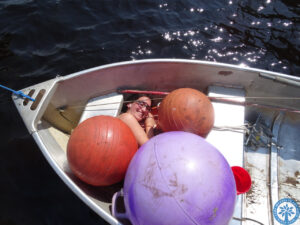 Some of you know that I have taught and tutored math over the years at various levels. Don’t worry – this is not a blog about the quadratic formula or any other math memory that you might have suppressed at some point in your school career!
My mathematical brain takes over at times when I least expect it, and so it occurred to me that there are opposing terms at work during the camp season that are worth diving into. We often think of subtracting with a negative connotation – I know I’m not a fan of the debits that are taken away from my bank account balance when paying bills or visiting the ATM (and I’m guessing you aren’t either!).
At camp subtracting is actually a GOOD thing. We spend less time on our devices (or no time at all if attending camp as a camper), less time in a vehicle or taking public transportation to and from school/work/home, and less time (and money spent!) going out to eat or swinging through the drive-thru because we don’t have time to cook. We also spend less time doing homework or the things we have to do and there is less excess all around (no trips to our favorite stores or online Amazon shopping sprees for 6+ weeks).
 We can’t forget about less comparison or judgment and fewer overall distractions. Being fairly isolated in the Northwoods of Wisconsin means that we are less urban (the closest Walmart is about 30 min away!). It is also safe to say that busy, hectic schedules often are the reason for less down time and fewer hours of sleep. I could go on and on (but I won’t!). The point is that all of these things SUBTRACT from the limited number of minutes in the day or from the quality of how our time is spent in general. I’m sure you are familiar with the expression, “less is more”. It perfectly ties in with what camp is all about (and where the “math” part comes in!).
Because at camp we are spending less time doing what is necessary at home to get through a typical day, there is actually MORE time to do the things that actually ADD to our days. This looks like more in-depth conversations because we are hanging out with friends face-to-face, more walking, skipping, or running to our next favorite camp activity (which leads to more exercise), and more opportunities for balanced meals and being at the dinner table as a cabin family three times a day.
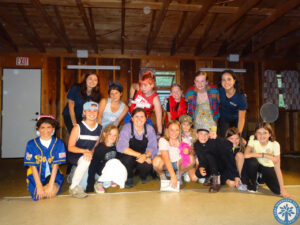 We also see addition at work because there is more choice in following our interests and passions by signing up for activities that we enjoy vs those that are required. We come to terms with making do with what we have (and not wanting more), and we learn to share with others (sometimes in giving and sometimes in receiving). I love how dressing up in costumes for various special events lends itself to a mass exchange of colored t-shirts and other items between campers and counselors, depending on what team you happen to be on!
We typically have more curiosity and empathy at camp for others because we see people for who they really are and not what we want/need them to be. There is more authenticity as the members of our community don’t feel the need to be “fake”. There is comfort and relief in knowing that it is OK to be the true version of you. We often hear that campers are their best selves at camp due to the ability to be their actual self and not some imitation self.
 We are able to put away most of the world’s distractions and focus on being truly present. There is also time to S-L-O-W way the heck D-O-W-N and enjoy life’s little moments. Seeing a freshly spun spider web on your way to breakfast, a unique pine cone on the path down to the beach, or deer bounding across the field as you make your way to evening assembly are some of nature’s “distractions” that we welcome and enjoy every single day! We also tend to get more and better sleep at camp because of how active and full our days tend to be. Turning in on average at 9:30 pm and waking up at 7:30 am makes for 10 full hours of precious rest that our bodies need and crave. Most of us are still growing!
At camp less is more. WAY more. The addition that happens through the camp experience is actually done by subtracting. Taking away those things for a while that get in the way of real relationships, real enjoyment, and real FUN. Excited for the adventures still to come with your camper/s!