

Category: Camp News
The Stuff from Which Growth is Made
 When others see what appears to be “success”, whether it be getting a good grade on a test or paper, a stellar performance at a recital or show, a star athlete on a winning sports team, a beautiful drawing/painting or piece of handmade art, a scholarship to a prestigious school, or any number of successes not mentioned here, the finale or end result is typically the only thing that is attributed to that success. The prize. The win. The score. The medal. The championship. The title. The award. The encore.
 As the above illustration shows, this is really just the “tip of the iceberg” to that person’s success. There is so much else that is below the surface to that accomplishment that it is often overlooked or dismissed altogether. Jealousy and envy can creep in because from the outside looking in, the successful person makes it look so easy or natural. It may even appear to be effortless. We often think to ourselves that “this person has it all” or “they don’t even have to try”. We may even pass judgment that the success was a handout vs something earned.
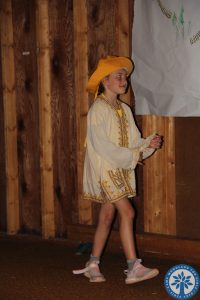 In my last blog about the story of how Formula 409® got its name (it was the 409th attempt that was deemed to be “it”), I talked about all of the failures and mistakes that went into getting to the end result or success. At Woodland, we embrace the missteps, taking 2 steps back in addition to the 3 steps forward, the snafus, the blunders, the mess-ups, and/or the “almost” got its. I left you thinking about how finally being able to canter on the 12th attempt or doing a dive from the dock after the 21st bellyflop is the stuff from which growth is made.
 On a recent run, I went down a street that is not on my usual route. Interestingly, I spotted a graduation sign in someone’s yard that read, “The tassel was worth the hassle.” To my earlier point, we often only see the “tassel”. We may not recognize the “hassle” that it took to finish a program of study and make it to graduation day. We know that graduating at any level is the culmination of several years of hoops and hurdles, struggles and challenges, and twists and turns. This is the “hassle” that helps get to the “tassel”. This too is an example of where the roots of growth spread far and deep.
 If we take each of the characteristics that are below the surface on the iceberg – that which we don’t see attached to someone’s success – we can better understand the growth campers experience that leads them to their “win” (big or small) and what you will observe at the end of their time with us.
These are a few of the ingredients practiced on a regular basis at camp that make up the recipe for growth (one of our core values) which leads to success:
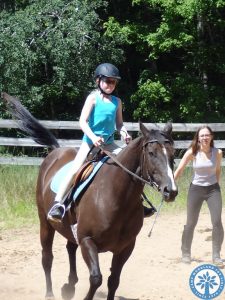
- Persistence: getting back up on a horse after being spooked, practicing a cartwheel over and over until you land it
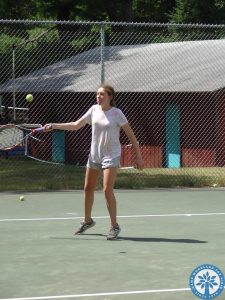
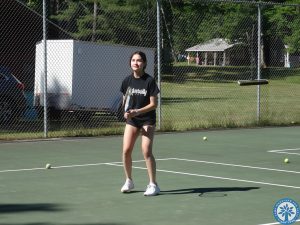
- Failure: missing the target in archery or riflery, serving a tennis ball into the net
- Sacrifice: letting someone else have a turn on the Big Banana, even though you really want to go (and it means you have to wait for another day) or offering to help with someone else’s cabin clean-up chore when yours has been completed
- Disappointment: finding out that you were the only person in your cabin who didn’t get mail or that your favorite art project turned up missing

- Discipline: coming to the barn before the official wake-up bell rings to feed the horses or doing your summer reading a little bit every day
- Hard Work: paddling across the lake to the other side for an overnight canoe adventure, cleaning animal cages in Farm Zoo
- Dedication: working on your lines for the play during rest hour or sailing different boats in varying wind conditions and with ever-changing crew experience
- Grit: delaying gratification by working on an advanced level for multiple summers because more time to practice and develop skills is needed (I’m adding this one because I think this is a great word to describe the effort and determination shown to keep pushing through even though it is hard)
 As parents, you have watched your daughter/s grow before your very eyes. Sometimes this comes in ways we can physically see (getting taller), while other times it is harder to pinpoint (having more confidence). It will be exciting to hear what transformations you notice when you reunite with your camper/s at the end of the summer after having been apart for several weeks or more. You can bet that for every “success” you do see, there was a whole lot of growth that occurred beneath the surface. The “tassel” of coming to the end of the camp season was definitely worth the “hassle”!
P.s. I’m on revision #27 for this blog!
What Formula 409 and Woodland Have in Common
 I recently discovered how Formula 409® got its name. Surprisingly enough, it is actually a tribute to the tenacity of two young Detroit scientists hell-bent on formulating the greatest grease-cutting, dirt-destroying, bacteria cutting cleaner on the planet. As the story goes, creating the ultimate cleaner didn’t happen on the first try. And it wasn’t on the 101st or the 301st either. It wasn’t until batch number 409 that they were finally satisfied. And so, the name stuck. Formula 409®. True story.
 So, what does the story of how 409 got its name have to do with camp you ask?! The answer is everything. It has everything to do with how we roll at Camp Woodland. Failures and mistakes are not shunned or discouraged. Rather, it is quite the opposite. Missing the mark (by a little or a lot) is celebrated as an opportunity for growth. It’s actually quite refreshing! Sure we have levels in certain activities; however, at the end of the day, no “tests” are given or “grades” recorded. Campers have the choice to challenge themselves as little or as much as they want in any given activity.
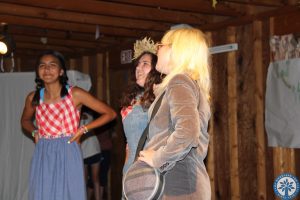 The idea of challenge-by-choice can be extremely rewarding and empowering. Campers typically make comparisons to earlier versions of themselves rather than measuring up to those who might be quite skilled in an area. Take archery, for example. There may be campers in the same class who are wishing they could simply hit the target and those who are shooting at 50 feet and trying for a given score or “qualifying” target.
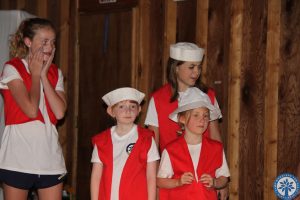 One of my favorite things about having mixed ages and skill/experience levels in a class like archery is the mentoring that happens between campers. Talk about reinforcing what you know by being able to explain or demonstrate it to someone else! It is also really cool to see campers cheer each other on and recognize those small, yet important “wins” when they do something better today (have an arrow stick in the target) than they could yesterday (retrieve arrows from the grass).
 When I was a counselor at Woodland, I taught water-skiing during the 2 periods of afternoon Rec Swim. It would indeed be rare for a camper to get up on skis, a kneeboard or wakeboard on the first try. First off, this activity requires that campers be at a certain skill level in swimming (to feel comfortable and adept at maneuvering in deep water). For some of the younger girls, this may take a year or longer to build up the skills of being a proficient swimmer in a lake setting.
 Once campers have the swim skills necessary to give a more advanced water sport a go, it may take several days of multiple tries to get up only to face plant (and have a gallon of water go up your nose). It may take another round of Rec Swim periods to make a loop around the lake successfully (more face plants). For campers who want to challenge themselves even further, they may practice going in and out of the wake (with wipeouts being an imminent possibility) before they truly get the hang of it. For campers who choose to work on passing levels in an activity, instructors are good at spotting when a skill has been mastered and can be done without hesitation vs when it is only demonstrated one time. A “test” is not necessary!
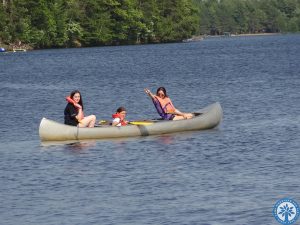 I’m guessing the two scientists who finally landed on the best mixture of ingredients to make the ultimate cleaner, were pretty pumped when they realized the 409th try was “it”. If you could experience the sheer joy of seeing a camper improve the tiniest amount or reach proficiency in a skill, it is truly why we do what we do!
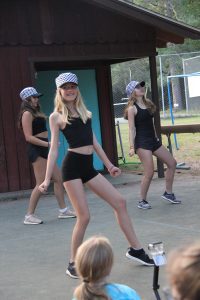 Hearing the squeals when a camper is finally able to canter after the 12th try, return a ball using backhand on the 31st attempt, do a forward roll after struggling the 19 times prior, learn lines for a play after fumbling during the previous 7 rehearsals, coordinate a string of dance moves after 42 run-throughs, read the wind direction in sailing after 4.5 weeks, do a dive from the dock after the 21st bellyflop, paddle in the stern position in a canoe after spinning in circles for several classes in a row, and more is absolutely the B-E-S-T. You see, it is through failure and mistakes that the stuff growth is made of can be found in abundance (more on that next time)!
P.s. In case you’re wondering, I’m on my 25th revision of this blog (but who’s counting?)!
Rebuilding Social Muscle
 A parent shared an interesting comment this past weekend. She said that she could tell her daughter was relaxing and settling into camp. Looking at the photo gallery, she could “see it on her face.” After these first couple of weeks at camp, her daughter’s smile was more natural, her body language more comfortable, and her closeness to the other girls more obvious.
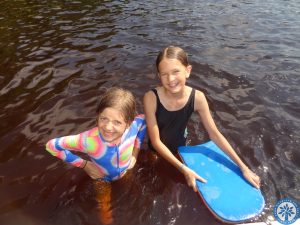 That was great to hear! We’ve noticed it too. As we’ve moved along into the session, and spent more and more time together— living in the cabin, playing in activities, and singing at meals —the girls have gotten to know each other better and begun to absorb the camp spirit that guides our relationships here. They recognize the Woodland community is uniquely kind and supportive, upbeat and inclusive. It’s a place where being your true self, perfectly imperfect, is celebrated. Your girls feel like they belong at Woodland, staying happily busy and deepening their friendships. It’s so nice to see this important growth.
 We were worried this common experience at camp would be tougher or slower this summer following the social isolation most kids experienced during the pandemic. Social skills are like a muscle that needs both training to be fully formed, and regular exercise to maintain its strength and ability. And like a muscle, social skills can atrophy if neglected. By squashing in-person peer interactions and forcing relationships online, the coronavirus pandemic robbed our kids of crucial social development, potentially weakening their ability to relate positively with one another. Being separated from other kids this last year, our children received very little social-emotional learning.
Fortunately, the power of camp life to bring us together has been proven stronger. The spirit of the Woodland community has inspired us all again, helped us understand ourselves and each other. It’s working. We’re rebuilding social muscle and providing it regular exercise. The results are amazing!
 Such results can be seen at our recent Cabin Unity Campfire, a culminating event of the first two weeks of camp. Each cabin comes dressed in a particular color that signifies its uniqueness as a group (and all the colors/cabins together form a rainbow). It is at this special campfire that cabins are presented their flags. The cabin flag has been a tradition since the late 80’s and is a way for campers to leave their mark at the end of the summer. Before returning home, each camper signs her name as a permanent record of being part of a special cabin group (Sunrise, Treetops, Silver Birch, Sunnyside, Starshine, Tamarack, Hilltop, Driftwood, and Aquarius) for a given year. Alumni who come visit always ask to see the flags with their names that give a timestamp of their moments in the history of Camp Woodland.
 The activities that are incorporated into this special milestone of the summer intentionally focus on the diversity each camper adds to making a strong team. It would be boring if we are all alike! One of my personal favorite exercises of this evening by the lake is sitting in a circle and passing around a ball of string. In this simple yet powerful gesture, each camper shares a positive affirmation about the person to whom she is passing the string. The end result shows a web of how the girls are all connected to each other. It is amazing how strong the bonds are in just 2 short weeks (and they will grow even stronger in the 4 remaining weeks of camp)! After hearing something kind and genuine from a cabin mate, each girl can’t help but to sit/stand a little taller with a smile that is a little wider. We love seeing that social muscle flexing and rebuilding!
Reference: RBC by J Carter, 7-7-21
The Growth Zone: A Great Place to Be!
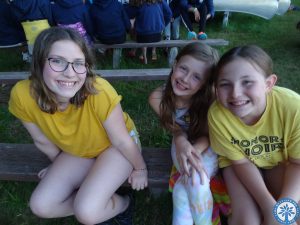
 You may be familiar with the idea that kids should be encouraged to go outside of their “comfort zone.” At camp, there are many chances to do that. It’s almost inevitable, in fact. New activities, new people, new food, new weather— life at camp is very different from the “comforts of home.” For most children, all that newness is bound to be challenging in some very unexpected ways, especially when it occurs without one of the main sources of comfort in a child’s life: parents and other trusted adults. But after all, that’s exactly the point. Because it’s so different, camp is not supposed to be entirely “comfortable.” It’s supposed to be (appropriately!) challenging. Some of the magic of camp comes from that fact, and when combined with a supportive, encouraging community, it’s a powerful force… even transformative.
 Our hunch is that most parents who send their kids to camp already get this. They don’t want their kids to sit back and coast through life always choosing what’s the easiest. They don’t want their children to develop a habit of complacency, to always need a road map of conformity to feel safe. They don’t want their children to be afraid to explore, or be tethered too tightly to what’s familiar and predictable. They don’t want their kid’s world to be that narrow and fragile, that strict and ultimately stale. Even though it might feel good at first, the “Comfort Zone” is ultimately unfulfilling. The irony is that it’s usually the adults who effectively build this trap for kids just as we care for their needs. We are the ones who supply the comfort zone, sometimes making it extra plush!
 Of course, the opposite should be avoided too. We don’t want our children to be in danger, to be faced with extreme consequences, or to risk permanent suffering. There are situations where attention to safety warrants taking specific, careful action to protect our children from harm. Certainly, we do our best to help our kids avoid being in the “Danger Zone.” We don’t want the challenges our children face to be so extreme they become discouraged. We don’t want them to take on so much risk that there is no way to recover. We don’t want for them to explore so much that they become lost.
 There’s a sweet spot, however, between comfort and danger. This is often called the “Growth Zone.” And it’s where we try to dwell at Woodland. There are plenty of challenges to be found here, for sure. There are bound to be moments when your daughter/s will struggle, experience some kind of minor setback, or feel frustrated by something not going exactly like what she’s used to. There are challenges built into the activities too: hitting the target in archery, balancing on the gymnastics beam, getting on a horse, learning your lines in drama, and so on. And there are even challenges to just living at camp and being part of this community: doing cabin chores, working through personal disagreements, handling the insects that find their way into the cabins, and trekking up and down the path to the waterfront, to name few.
 We hope you can see how all of these challenges are appropriate, ones where the campers here can successfully develop the skills, confidence, and perseverance to overcome them and grow. That’s where the the camp community is crucial. All around us at camp there are helpful friends. There is encouragement and support. There’s coaching and plenty of good role models to demonstrate how attitude and effort can make a big difference in moments of discomfort.
 And when so much of camp life is also incredibly fun, there’s a unique power inspiring kids to carry on and accept the challenges that come. The result is recognizable personal growth in self confidence and resilience. Over time, adapting to challenging situations becomes normal, expected. In this special environment, individuals develop a sense of who they are— capable and strong. They begin to understand that what’s new and different is potentially an opportunity. They realize that stepping out of their comfort zone, but not so far to be in danger, is a recipe for growth. They learn that growing, not comfort, is what makes life fun. With the first 2 weeks of acclimating and adjusting to camp life, cabin groups, and the routines of community living in the rearview mirror, there will be even more opportunities for growth ahead!
 Will your camper/s describe their camp experience like this? Certainly not in so many words, but we know they are absorbing this idea. They’re living in the growth zone everyday while they’re here at Camp Woodland. Amidst all the action and silly fun you see at camp, there’s something lasting and beneficial happening too. Such good stuff!
Reference: RBC blog by J Carter, 6-14-21
Play Matters
 Independence Day is quite a celebration around here! The CIT’s helped us celebrate in style by hosting 4th of July Games, which this year was on the actual holiday (and not the Sunday before). Woodland alum will recognize perennial favorites such as the clothes relay down the Woodland Road, water balloon toss, lifesaver pass, shave a balloon, and water relay (just to name a few!).
 In addition to a multitude of laughs and memories to recount later to friends and family, there is a LOT more embedded within an afternoon of fun and games than just meets the eye. I’m sure it is no surprise that there is a noticeable decline in the amount of time spent playing for both kids and adults. Busy schedules drive us from the moment we open our eyes in the morning until our head hits the pillow at night. The great news is that there is an abundance of play at Camp Woodland! Play is what we do!

In a TEDMED Talk Jill Vialet shares that, “It is easy to dismiss play as trivial and unimportant; however, there is nothing farther from the truth. Play is kids’ work in that it is a form of experiential learning that contributes directly to a person’s ability to handle failure, to work in teams, and to take risks.” (Jill sounds like she must have spent some time hanging out with Mr. and Mrs. Jordan at Woodland & Towering Pines!)
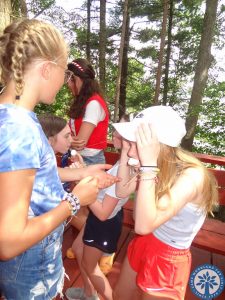 If a very large balloon covered in shaving cream pops during one of the games, then a camper is faced with an opportunity to gracefully handle the situation. Learning not to take things seriously and to laugh at oneself are good qualities to master for more challenging dilemmas later on. Being able to work with your teammates to toss water balloons down the line involves problem solving and collaboration. The awkwardness of passing a lifesaver from person to person is great practice being silly and not caring what other people think. Playing offers a multitude of little ways to step out of our comfort zones and make frequent deposits in our confidence banks. This will pay huge dividends later!

According to Jill Vialet, play matters because:
- it provides a brief respite from the tyranny of apparent purpose (I guarantee campers are not thinking about the final math test they took at the end of the semester during the water balloon toss!).
- it compels us to choose to say, “I care” and better come to know ourselves (Stuffing a giant marshmallow in your mouth is a great way to do just that!).
- people matter and it reminds us of our interdependence with others. It gives us a chance to see other people and in turn to be really and truly seen (There is a whole wide world out there, and it is a lot of fun to play with others!).
Of course, this fun afternoon of play was followed by the annual 4th of July Campfire at Towering Pines (another opportunity to play)!

References: More Than Fun and Games – Play Matters by Nancy Brown (Huffington Post) and TEDMED Talk by Jill Vialet.
A special shout out to Bill Gonio, friend and former Towering Pines staff, for your inspiration in writing this blog!