
Monthly Archives:October 2025
From Mom’s Legacy to Her Own Confidence
One of the youngest campers at Camp Woodland signed up for riflery for the last 2 weeks of the summer. She was barely bigger than the rifle she would be holding. Her motivation for taking the class at the end of the summer?
She said it was because her Mom took riflery when she was a camper and had passed all the levels over the course of multiple summers. She saw her Mom’s name on the wall in the lodge for successfully completing the highest level, “expert”.
This Silver Birch camper was determined and nervous at the same time. It took her a while to get the hang of it. Getting the feel of the rifle and how to hold it steady is an exercise in patience. Learning how to look through the sight to see the target takes practice.
Aiming the gun to hit the target is another step in the process and summons persistence. Breathing evenly and calmly to keep a smooth rhythm before, during, and after shooting takes some getting used to (along with a dose of positive self-talk).
Putting it all together? More patience, practice, persistence, and positivity.
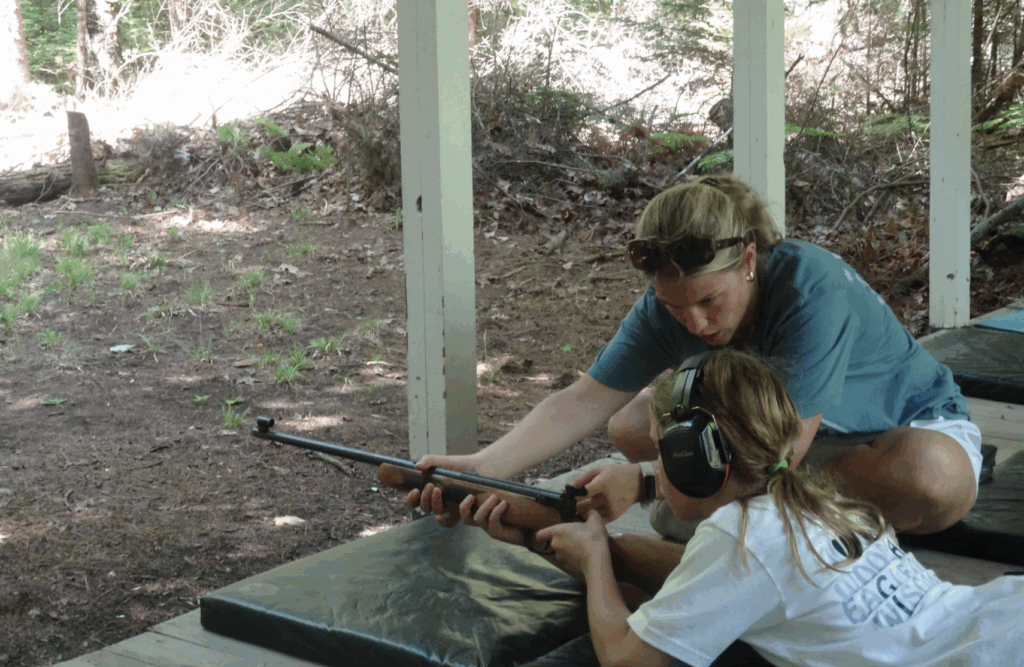
By the end of the 2-week period, this Woodland camper was confident in her skills and able to consistently hit the target. She was now motivated by her own reasons to work hard. Riflery became fun and something she looked forward to every day!
Three Things Everyone Needs to be Truly Motivated – Letting the Secret Out of the Bag!
Research shows kids (adults, too!) thrive when three basic needs are met:
- Autonomy → Having choice and ownership (“I choose to…”).
- Competence → Seeing growth and impact (not perfection, but progress).
- Relatedness → Feeling connection and belonging.
Why This Matters at Camp and to Our Friend Taking Riflery (or any activity!) for the First Time
At Woodland these needs are woven into daily life:
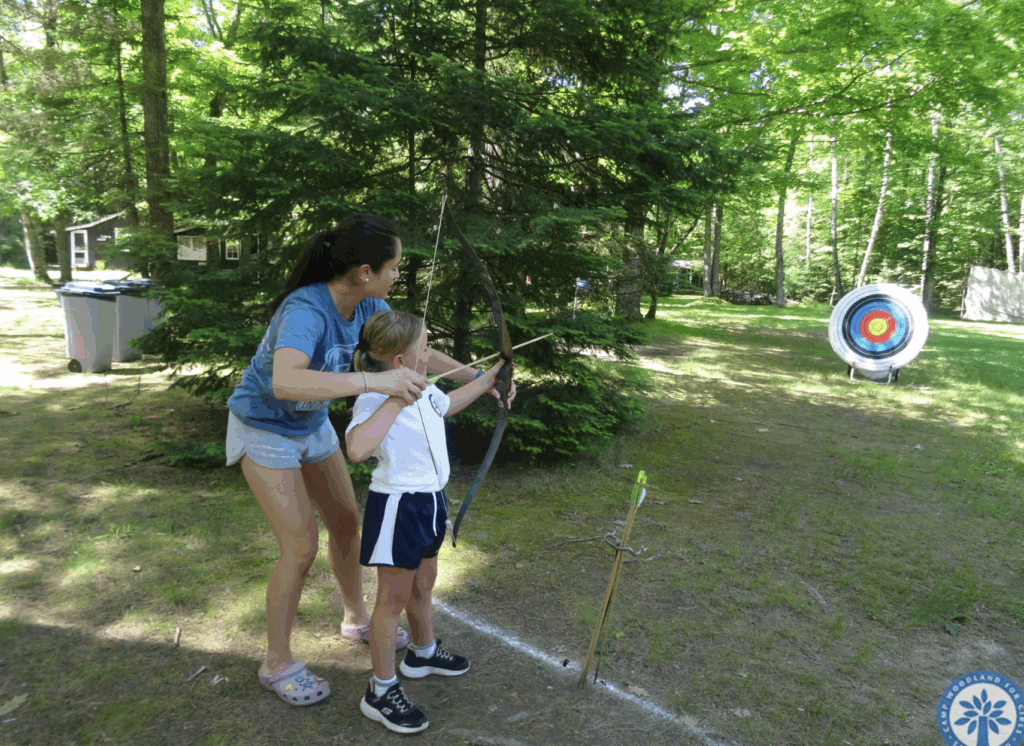
- Kids choose activities (autonomy). This camper from the youngest cabin made the choice to give riflery a try for the last activity sign-up of the summer.
- They see skills improve (competence)—on the lake, at the barn, in archery, or making friends. Improvement was visible by the scores she was getting after each round and being able to shoot at the riflery range consistently almost every day for 2 weeks.
- Cabin life, activities, and traditions create real belonging (relatedness). Through the encouragement and guidance from the counselor leading the class and the other girls showing their support built connectedness and fostered a sense of confidence in doing something for the first time (and with other campers who were much older than she was!).
When these three align (choice, competency, and belonging), kids don’t need pushing. The shift from external motivation to genuine engagement explains why camp works for child development in ways that surprise even us sometimes. They’re intrinsically motivated to dive in, try new things, and take steps towards independence.
This is just ONE example of MANY from the recent summer!
The Bottom Line
This is why camp “works.” At every turn– even when taking a new activity for the last 2 weeks of the summer—campers gain autonomy, grow confidence, and build friendships. They return with skills and motivation that can be applied at home, school, and beyond. We hope your daughter/s will join us in 2026!!