

Camp Woodland Blog
Leaving Home to Go Home: A Message from Closing Vespers

by alum Alice Decker Burke (camper, counselor and parent of 1st year camper)
For the past 25 years the following essay written for Alice’s AP English class in 1994 is read at the final Vespers on the last day of camp. Parents often tell us that Sunday is such a hard day. Hard to understand. Hard to know what to say. Hard to know where to be or not be at any given moment so as not to impose. On one hand, the excitement of seeing your daughter/s after a long hiatus is hard to contain. On the other hand, the struggle is obvious as campers are torn between the sadness of leaving a tight-knit family and the connection to a place that is also home and seeing parents and family. The good news is that all of these conflicting feelings are normal!
For some, the beautifully chosen words Alice uses may give a little insight to the mixed emotions and awkwardness of Parents’ Weekend. For others, it will bring back memories and nostalgia of being at Woodland whether away for 10 days or 10 years. Either case, we hope you are enjoying whatever this side of summer brings before another busy school year is in full swing. We look forward to seeing you at Camp Woodland in 2020!

The car hums quietly beneath me as we turn onto County D. My father comments cheerfully about the houses on either side of the road, my mother marvels at the beauty of the tiny lakes as we pass them by, at least one every five minutes. But I sit, perfectly still, feeling my heart beat stronger with every roll of the tires. As we follow the twisting road, we round a curve and look straight into an open field, canopied by Eagle River clouds. My soul stretches to the tips of my fingers as I reach my hand out the open window and towards the sky. My parents hear my indrawn breath and smile at one another, a little sadly, knowing this love is one they can never share.
We turn the corner, and I lean out the window quickly, drinking in the air with a thirst that has grown steadily for nearly a year. I welcome every trace of sunlight filtering through every tree stretching over every curve of every trail that branches off the road onto the shadowy forest. I know exactly when the stable will peek through the branches, and which horses will greet me with quiet whickers and shimmering manes. I see the tips of the sailboats over the edge of the hill, waving at me with their graceful masts bobbing in the waves. Pure happiness bubbles up from the depths of my blood, and I laugh with familiar wonder as I feet it course through me.

I jump free of the car, and wander up the hill, feeling my soul run ahead of me, peeking into corners and rolling with delight in the sun-warmed grass. Friends run out of cabins into my arms, and I am scrunched in a twenty-person hug. They grab my bags and set off for my cabin, but I cannot follow yet. My soul is still up in the trees, and I stand with my face turned up to the sun, twirling around with unconditional joy, my arms spread wide, my soul singing the familiar song of wind in the birch trees.

Eight weeks later, I throw my duffle into the trunk, amazing my father with my strength. Mom laughs and tells me that I am stronger than my dad now. Mom. Dad. Those words stumble off my tongue like a long-forgotten language. I need to remember it now.
It is funny, really, how the beginning and the end are the only concretes here. The minute I arrive, it is as if I never left. The minute I leave, it is as if I just came. The middle is a maze of joy and laughter and memory, like a disorganized stack of colorful photographs. I throw them into the trunk of my mind along with my duffles – I will pull them out some cold November night when I cannot fall asleep, and look through them quietly until the peace of their memory drowns out my fears.

My mother strolls out of the cabin, letting the screen door shut carefully behind her. She has a look of incomprehension and mild distaste, as if she wonders how I live in these conditions for two months. My home, but not hers. I start to tell my mother that the director needs to speak with her before we leave, about the payment, but she interrupts me, laughing. She says that she cannot understand a word I say, that we speak a dialect up here, and I will need to start annunciating when I get home, if I want anyone to understand me. My language, not hers.
Dad shuts the trunk and announces that we must be leaving so we can get back “home” by ten o’clock. They must go to work tomorrow, he reminds me. He tells me to say my goodbyes. Not as if he understands. I cannot say “goodbye” to happiness, then climb in the car and roll off around the corner and leave love behind. It is not that simple.

I am bombarded by my friends, who cling to my arms and cry on my shirt and ask in choked sobs why I’m not crying, too. Am I not sad? How can I stand leaving home to go home? Very few understand that there are bands of loss around my chest that are squeezing so tightly with agony that I can hardly breathe, but I fight the tears. I do not know why. I keen with them all, clinging as tightly to them as they do to me, but the tears never come. Pain, but no release. My own kind of grief, I suppose.
My parents stand patiently behind me. They do not understand, but they do know enough not to try, and I am grateful. At last, Dad gently takes my arm and leads me to the car, and the others let go. My family tears me from my family, and the car door shuts me in.
I sit perfectly still as the car starts underneath me. The motor is so foreign, so mechanical. We turn into the driveway, straight and narrow, that leads to the corner and the highway and the real world. A real world without sailboats, without campfires, without unconditional love and universal family. For just a moment, I hate it so intensely I dig my nails into my hand to stop myself from tearing out of the car and plunging back into the woods. But, like passing through an open door, feeling the sudden burst of wind then stillness, the momentary hatred fades, and is replaced with the long familiar emptiness. The corner turns behind me, and I close my eyes, with only my memories to keep me company on the long drive home from home.

Happy National S’Mores Day from Sunnyside!
 Now that summer 2019 is a collection of cherished memories, we will begin our series of highlighting each cabin throughout the upcoming months. You will find “best moments” and fun photos from the girls of the spotlight cabin from the recent summer. Sunnyside is going to kick us off this year with a fitting tribute to National S’mores Day (August 10th).
These girls will be CIT’s next year and are already up for the challenge! They stepped in to take on “singing” duties before bedtime and a number of other leadership roles for the 2nd half of the summer including hosting a S’Mores Party on the last night of camp. Here is what they had to say about their 6 weeks at Woodland:
How did you SHINE this summer?
Lucy: I started and finished the sitting levels in riflery in 4 weeks!
Tori: I improved my skills in sailing and sail race.
Ellie: Passing levels in riflery and being a good role model for the younger girls.
Katherine: By passing out of level 4 swimming – it was very hard for me to pass that level.
Monica: I tried chicken!
Molly: I passed levels, tried new things, and made friends.
Isa: I made new friends, passed levels and I had lots of fun with everyone.
Aubrie: I passed out of swimming, achieved my advanced level in canoeing, learned to play tennis and so much more!
When were you your BEST this summer?
Lucy: The whole summer I was at my best. At school my best is studying hard.
Tori: I think the 5th week was my best as I really improved in wake-boarding and sailing, and I had a ton of fun at Olympics.
Ellie: Being at my best at camp means learning from and loving my friends here. At school it means getting good grades and being confident with myself.
Katherine: I was at my best at the beginning of 2nd session because I had no stress. My best at school is when I’m on top of my school work.
Monica: I was at my best practicing for horse show. My best at home is being on top of my school work/violin and hanging with friends.
Molly: The final week because I have excelled in activities and special events. I’m at my best at home when I’m on top of my school work, in a good place with my friends and feeling confident.
Isa: I decided to have a good time and enjoy everything I did. At home or school, I try my hardest to do my best and be with my friends and family.
Aubrie: I was at my best when I was with my friends laughing and having an amazing time at my activities.
Describe a CHANGE you noticed in yourself this summer:
Lucy: I noticed myself becoming more mature and ready to be a CIT.
Tori: I became more confident.
Ellie: I have gotten better at being situationally aware and have more confidence in myself than before. I can do big roles in drama well.
Katherine: I’m more carefree and don’t care what others think. I learned that even if it takes a long time, if I persevere, I can do it.
Monica: My tennis got better, and I became better friends with my cabin mates.
Molly: I’m not afraid to do things like speak my mind, be creative, and be myself!
Isa: I had a good attitude and tried to live camp to the fullest. I learned that there are always people to help you.
Aubrie: I became more patient and understanding and became skilled in new activities. I learned to persevere and get back up if I fail.

What is something you are THANKFUL for this summer?
Lucy: Joining cabins – I missed my cabinmates from 2016.
Tori: I am thankful for being able to try new things and have so many opportunities at camp.
Ellie: The friends who are there for me no matter what.
Katherine: I am thankful for having such an amazing cabin!
Monica: My cabin mates and the staff.
Molly: Having the ability to keep coming back to camp!
Isa: I am thankful that I can have this experience.
Aubrie: I am thankful I was able to grow the camp bond I have with so many people.

From Camp to Home: Totally Unplugged and Fully Connected

One of the great things about being at camp for 6-weeks is that it gives us all more time to spend just hanging out and enjoying each other’s company. Girls can be found chatting about everything under the sun, playing a game of cards, making a sand sculpture at the beach, reading a book, or just being together at one of many favorite gathering spots around camp. From morning to night, camp life provides an uninterrupted flow of friendly conversation and opportunities to do whatever the present moment offers. It is a true luxury to enjoy spending time like this with the amazing people at Woodland.

When campers are asked what they love about Woodland that’s different from home. There are lots of answers to this question, and it’s those differences that help explain why girls love camp. Many of the answers you might expect: “My camp friends… they know the real me,” “There’s so many fun things to do here,” “I love the food at camp.” It may come as a surprise campers also include, “I like not having my phone.” Teen and pre-teen girls who happily give up using their smartphone? Say it isn’t so!
You might expect the opposite, that the girls at camp are missing their phones, that they can’t wait to return to their Instagram accounts or Snapchat streaks. But it’s not true. Back home though, we’ve all seen it. Their lives revolve around their smartphones, using them for daily communication, socializing and entertainment. We’ve also seen this technology use effectively rule their lives, with teen girls spending an average of 9 hours per day on their phone, according to one study. Being constantly drawn to those little screens is a powerful force that we all deal with. As this sculpture “Absorbed by Light” portrays, our communication devices are effectively isolating us and distorting what we know about the world and feel about ourselves.
 So why is camp different? If girls are happy to not use their phone here, why not at home too? The answer to that question is that at camp there’s simply no need for a phone. The authentic days of camp make any mediating device unnecessary. Here the community provides plenty of socializing, face-to-face communication, and rich real-world entertainment everyday. Having been at camp for 6 weeks now, campers have become totally unplugged and fully connected with each other. Girls here have lots of free time, but are never bored because there are friends all around, always engaging things to do available, and no pressure to perform a certain way. At home, unfortunately, all of this is less true, and their smartphones are used to fill the gap.
 What’s amazing is that the girls recognize all of this. Living here at camp in this technology-free community has demonstrated for them that their smartphones, while convenient and perhaps even necessary in modern life, are also a burden. They feel a real sense of relief giving them up and not needing them. They welcome reclaiming those 9 hours per day, freeing themselves to enjoy all that camp offers. Woodland girls love camp because they feel fulfilled without needing their phones.
At home, where the tight-knit community of camp is absent, the challenge is to find a healthy balance between using our phones and the kind of real-world, fully-engaging experience we all crave. The challenge is to structure our time, identifying when using technology is a benefit and when it is distancing us from what we really want and need. The luxury of camp life is not available all year long, after all that’s why we love camp and return to it every summer, but we can recognize what it provides and with this awareness, implement elements of it more broadly.
 As you prepare to reunite with your camper(s) this coming weekend, we encourage you to put some thought around fostering this idea of being fully connected at home as well. Take advantage of good habits that have been in practice for well over a month now and help your daughter resist the urge to return to spending more time on a device than with the people around her that matter the most or doing the things she enjoys away from technology. Empower her to lead the way…she is up for the challenge and who knows, you may be too!
another post adapted and inspired by RBC of NC
Anne Jordan’s Love – You Want To Pass It On

by Alice Lurain (shared at Anne Jordan’s memorial service on March 18, 2018, and again at a remembrance for Mrs. J as part of Woodland’s 50th Anniversary Celebration on July 13, 2019)
Grab a tissue!
A survey of the framed photos on my bedroom dresser reveals the faces of the people who have touched me most deeply and persistently over the course of my lifetime. You will find my parents, my sister, my two dearest friends from childhood, one of whom – The Other Alice – many of you know, and you will find Anne Jordan.
Mrs. Jordan first entered my life in 1985 when I was a 9-year-old camper in Silver Birch. I loved everything about camp – sleeping in a cabin, constant activity, skits, songs, attention from older girls who seemed so cool, and the fact that I could wear my favorite blue velour sweatshirt every day, and no one cared. Despite this, at some point in that summer, around week 4, I sent my parents the following letter, which I found last spring in their basement. It reads: “Dear Mom and Dad, I like camp but I miss you too much to stay. Please come get me or ask Gramma and Grampa to. This isn’t a joke. Love, Alice.” Apparently, my parents called Mrs. Jordan when they received this dire rescue request, because I also found the wonderfully thoughtful response that she wrote, reassuring them that this was normal and not cause for alarm, that she had checked on me and found me having a wonderful time. She wrote, “I can assure you that she will not be sorry that she completed the season.” This was the first of many times when Mrs. Jordan knew me better than I knew myself. The following summer, I was a 10-year-old Treetopper. One day, on the way back to the cabin after lunch, I was talking to another girl about one of our cabinmates in that mean, catty way only pubescent girls can, when Mrs. Jordan walked up behind us. She said my name in a calm, quiet way that stopped me in my tracks and made clear I was about to be required to account for my actions. I still remember the feeling of absolute mortification I felt as I turned to face her. With her steely gaze upon me, she said simply, “That wasn’t very nice.” I stammered out some sort of apology; it seemed as though she let me go on in flustered agony forever. Then she said, “Alice, you need to think about what kind of person you want to be in the world. What do you want people to say about you when they talk behind your back?” Over three decades later, that question still echoes in my head during moments when I am tempted to do something petty, ignore someone’s feelings, or just take the easy way out of a situation.

Throughout my childhood, into young adulthood, and well beyond, Mrs. J always brought out my better self because she let me know that she expected that self to show up, and I never wanted to disappoint her. I still don’t. Patient, unflappable, and insistently calm under fire, nothing ever seemed to surprise her. She let us know that she would still love us when we inevitably screwed up, but she would also hold us accountable. With Mrs. J, there was always a second chance, but never a free pass.

She believed that what young people most needed and wanted were limits and a safe space in which to test those limits, surrounded by adults who supported their growth with grace and humor. She taught me that the children are always watching us and made me believe that working with young people was both an incredible gift and responsibility. I’ve been a high school chemistry teacher for nearly 20 years, and if I trace back along the winding road that led me to the classroom, I find Anne Jordan at the beginning. Both consciously and unconsciously, I have, in many ways, modeled myself as a teacher after her. I enjoy knowing, for example, that students find me both hilarious and terrifying in equal measure, and I work very hard to let them know that I care deeply about who they are as people, that I see them.
Also in my parents’ basement, I found my notes, written in my 17-year-old handwriting, which shows slight improvement over the 9-year-old handwriting, from Mrs. Jordan’s lesson to the staff on “guidance techniques.” Among these pearls of wisdom are: tell them what you want or expect; don’t lose your cool – stay calm; when things are not going well, stop and start over, and a perennial favorite, don’t just do something, stand there. In my most challenging moments with students, I channel her calm; I say, “Maybe you didn’t hear me…”
I often wonder, as I’m sure many of you do, what my life would have been like if I had never found my way to Camp Woodland and Mrs. J’s watchful presence. What kind of person would I have been? So profound is the impact on my character that I am not able to imagine what that alternate Alice would look like. Through Mrs. J and Camp Woodland, I learned that actions have consequences, that sometimes it doesn’t matter what YOU want, and that you really ought to clean up after yourself, because that job wheel keeps turning, and eventually “clutter” is going to end up on your name.
Mrs. J and Camp gave me the chance to be unreservedly silly. By the time you’ve proudly worn underwear on your head or a bathing suit over your clothes for reasons that have been lost to time, led rousing renditions of the Ricket-an-doo (now what is that?!), and written and performed camp-themed lyrics to Billy Joel songs while dressed in a polyester bell-bottom jump suit, you’ve discovered that pride and self-respect do not preclude you from acting like an idiot and enjoying it.
Mrs. J and Camp gave me the gift of understanding that serious work and serious fun should be the cornerstones of a joyous and meaningful life. Long after I left Woodland, Mrs. Jordan remained a consistent presence in my life through the regular exchange of letters. I wrote to her about moments of success, failure, self-doubt, and learning. At some point, she could no longer write back, but I still felt a certain happiness and comfort in telling her my stories and imagining how she would respond.
I know for certain that Mrs. Jordan lives on in me, and I work every day to pass on the gifts she gave me to the young people in my life. As all of you know, it only takes a spark to get a fire going, and soon all those around can warm up in its glowing. That’s how it is with Mrs. J’s love, once you’ve experienced it; you want to pass it on.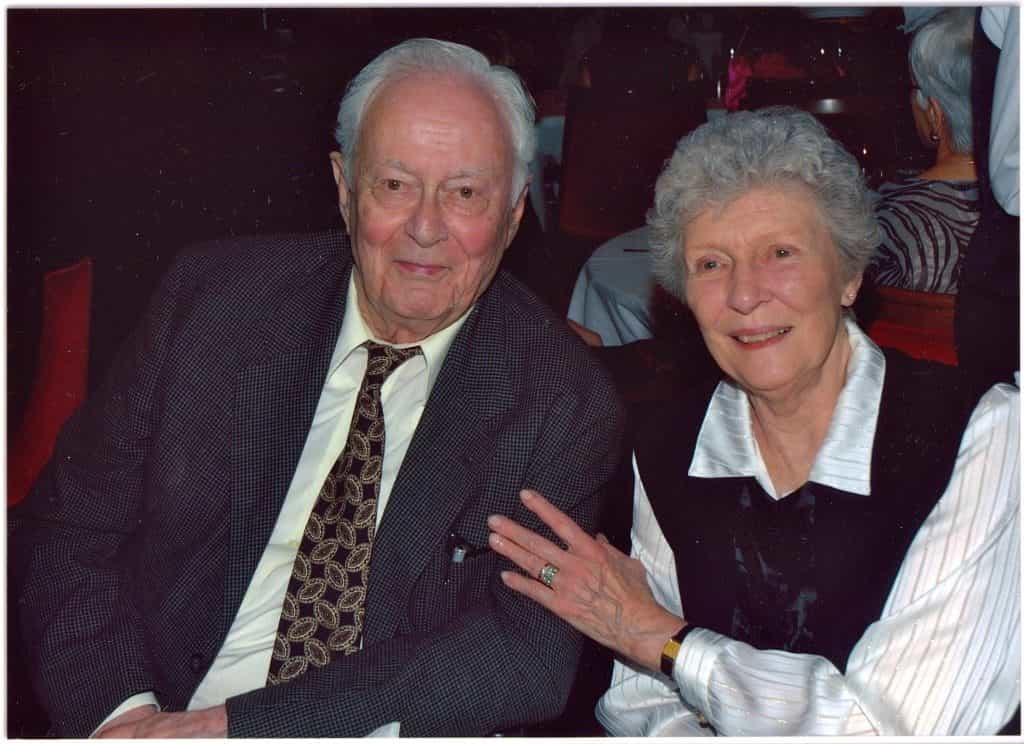
Camp Woodland: A Place of Belonging
It’s not too difficult to see that the girls at Woodland this summer are having a great time. If you visit camp, all the action is what you first notice: the horseback riding at the barn, tennis on the courts, forward rolls in gymnastics, arrows and bullets hitting the target, the dipping of paddles and hoisting of sails, and busy hands in arts and crafts. Likewise, your first glance at the photo gallery leaves the same impression. The girls are engaged in so many ways, happily active, smiling and chatting with each other. That’s all good stuff, but on another level, there’s something remarkable also going on. It’s the culture of Woodland. It’s the way the girls treat each other, the assumptions and values that subtly guide them. It’s how it feels to be at Woodland, living and playing together in this tight-knit community.
It’s tricky describing this culture because it’s certainly multifaceted and complicated, but one aspect worth noting is the sense of belonging girls enjoy at Woodland. Almost immediately after they arrive, girls are comfortably in groups around camp, paying attention to each other, including each other no matter what’s going on. Cabin groups provide the backbone of this feeling, but it’s present everywhere and is on steroids now that the awareness of how little time is left is beginning to sink in.
Free from the competitive social and academic pressures of school, this all-girls environment is devoted foremost to the quality relationships we have with each other. Simply put, the culture of Woodland, and by extension what it means to be a “Woodland Girl,” begins with being “kind” to each other.

The culture here at Woodland is one of optimism, respect, love, and altruism. The amount of kindness is astounding; people are always seeking out ways to brighten someone else’s day in any manner. Girls are encouraged to stand up for what is right, to be their best selves no matter who is watching (or not watching), and to aim towards making the camp community even better than it already is. It allows us to feel a sense of support unlike anything else. Campers are more than willing to take opportunities to “do a little good” by writing a friend a sweet note, picking up a piece of litter on the ground, or walking a younger camper to her activity. Everyday at camp is filled with these small, powerful moments.
Woodland is a place where girls feel they belong, where who they really are (and not who they think they’re supposed to be) matters. At camp, there’s mutual caring. It’s a place where we all value and rely on each other without any reference to our age, our intellect, or our looks. Nobody has to say it, but for these girls, Woodland is “a place of their own” where they feel safe and happy. And that feeling becomes the foundation for all of our relationships at camp, the root of the friendships, and the spark for personal growth.
More than ever these days, young people need certain experiences to overcome the forces of abstraction and isolation they face. Just think, for example, how all that screen time impacts their ability to communicate face-to-face, to engage the inevitable imperfections of the real world (compared to the edited and filtered online version of things), and to be actively creative and confidently engaged. They need a place of belonging where they can practice being more connected to those around them, where they can play, encounter new challenging experiences, and grow.
Thankfully, Woodland is such a place.
Inspired by RBC of North Carolina.